Why the "Greatest Weakness" Question Isn't the Trap You Think It Is
Knowing how to answer the "what is your greatest weakness" question is a skill most candidates underestimate. You're sitting across from an interviewer, the conversation is going well, and then it lands: "What is your greatest weakness?" Your stomach drops. You scramble for something that sounds honest but not damaging, humble but not pathetic. Most candidates answer this question badly, not because they lack self-awareness, but because they've been told their entire lives that admitting weakness in a job interview is career suicide.
It isn't. Answering this question well is actually one of the fastest ways to separate yourself from candidates who deflect, freeze, or reach for the infamous "I'm a perfectionist" non-answer.
The recruiter asking this question isn't setting a trap. They want to see whether you know yourself, whether you can reflect honestly, and whether you take your own growth seriously. That's it.
The "Weakness + Recovery Plan" Method: 3 Proven Answer Patterns
The most effective answers follow a simple structure: name the weakness clearly, describe what you've done about it, and show where you are now. Recruiters call this self-awareness with a growth narrative, and it works because it's both honest and forward-looking.
Here are three patterns that consistently land well:
- Name a real but non-critical weakness. Choose something genuine that doesn't disqualify you from the core responsibilities of the role. A project manager admitting they struggle with delegating is believable and fixable. A surgeon admitting the same thing is a red flag.
- Show concrete steps you've taken. "I used to avoid difficult conversations, so I enrolled in a communication skills course and now I schedule feedback sessions proactively." Specifics matter.
- Demonstrate current progress, not perfection. You don't need to say the weakness is gone. You need to show you're managing it deliberately.
What to avoid is just as important. Fake weaknesses destroy your credibility the moment they leave your mouth. "I work too hard," "I care too much," and "I'm a perfectionist" are so overused that recruiters have a physical reaction to hearing them. They signal that you're not willing to be honest, which is exactly the opposite of what the question is designed to surface.
✓ What works: A weakness that's real, that you've already started addressing, and that won't make the interviewer question whether you can do the job at all. ⚠ What tanks your answer: A disguised strength ("I just have such high standards for myself"), a weakness that's central to the role, or a weakness with no recovery plan attached.
The goal isn't to convince the recruiter you're flawless. It's to show you're the kind of person who can identify a gap and close it.
Matching Your Weakness to the Role
One detail most candidates miss: the weakness you choose should be calibrated to the job you're applying for. A data analyst who admits to struggling with public speaking is answering well. That same answer from someone applying for a client-facing sales role is a problem.
Before your interview, read the job posting carefully. Identify the three or four skills that appear most prominently. Make sure your chosen weakness doesn't overlap with any of them. If the role requires strong written communication, don't say writing is your weakness. If it's a solo contributor role, admitting you find it hard to work without team input is fine.
This isn't about gaming the question. It's about being strategic with honesty, which is what good professionals do.
Why Your Resume Often Doesn't Reach the Interview Stage
Here's a harder truth: interview preparation only matters if you get to the interview. For many candidates, the bigger obstacle isn't the weakness question. It's the fact that their resume never reaches a human in the first place.
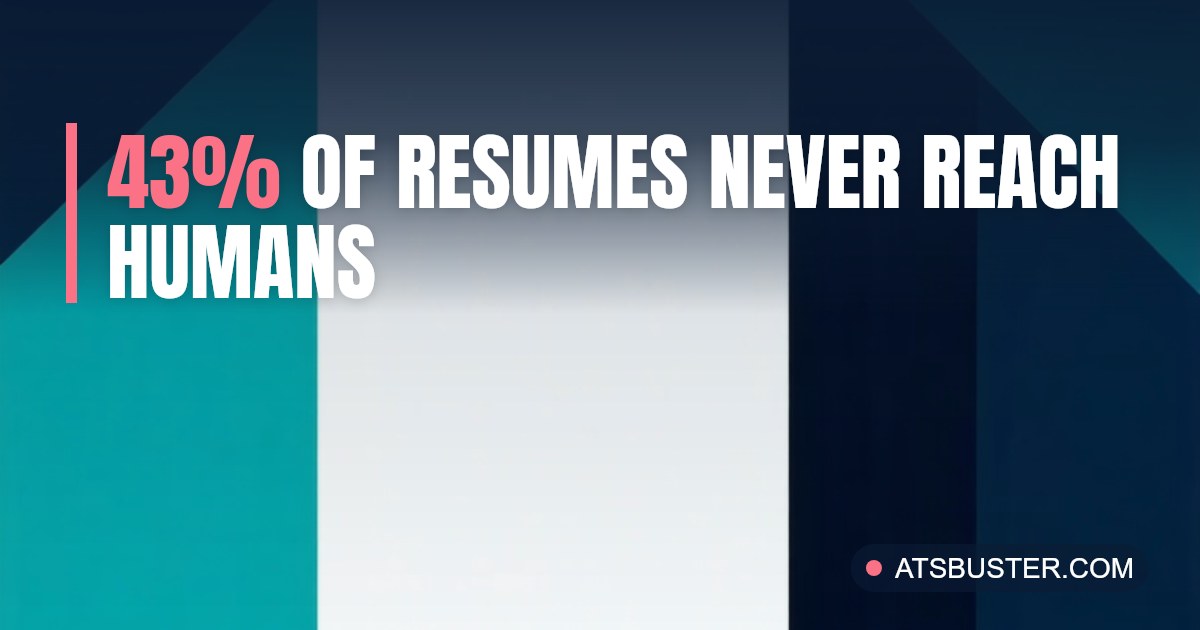
43% of application rejections happen because of formatting and parsing errors, not a lack of qualifications (EDLIGO, 2025). Recruiters at larger companies use Applicant Tracking Systems to sort through hundreds of applications per opening. These systems rank resumes by how closely they match the language of the job posting. A resume that's well-written but uses different terminology than the posting gets pushed to the bottom of the stack, invisible to anyone.
The math is brutal. With over 150 candidates applying to a single role at a mid-size company, the recruiter typically reviews only the top fraction of ranked results. Everyone below that threshold doesn't exist, regardless of their actual qualifications.
Common resume formatting errors that hurt your ranking:
- Two-column layouts that cause parsing software to read your experience in the wrong order
- Tables and graphics in the experience section, which many systems can't process
- Inconsistent job titles that don't match the terminology in the posting
- Missing keywords from the job description, even when you have the underlying skills
None of these errors reflect on your ability to do the job. They're technical mismatches between your document and the system reading it. That's not a qualifications problem, it's a formatting and language problem.
How to Take Back Control of the Application Process
Preparing a strong answer to the weakness question is worth your time. But walking into an interview with a perfectly rehearsed answer means nothing if your resume was filtered out three weeks before the call was ever scheduled.
The manual alternative is grinding: reading each posting carefully, rewriting bullet points, swapping out terminology, checking formatting on multiple devices, and doing it all over again for the next application. For candidates applying to dozens of roles simultaneously, that's not sustainable.
ATS Buster handles the tailoring work in about a minute. It compares your resume against the specific job posting, identifies the missing keywords and language, and rewrites your resume to match. The result is an ATS-readable document built for that exact role, not a generic version you're hoping will survive the filter. It also generates a cover letter and exports a clean PDF.
The practical effect is that you spend your preparation time on the interview itself, not on rewriting documents. You walk into the room having practiced your answers, not having spent three hours adjusting bullet points.
Start with a free account, 3 credits, no credit card. Tailor your resume to your next application before you spend another hour rehearsing answers to questions the recruiter may never get to ask you.
Frequently asked questions
Sources & references
- EDLIGO, analysis of 1,000 resumes, 2025 (plain text, no link)
Enjoyed the article?
Tailor your resume to a specific job in about a minute and get past the recruiter's filters.
Try ATS Buster